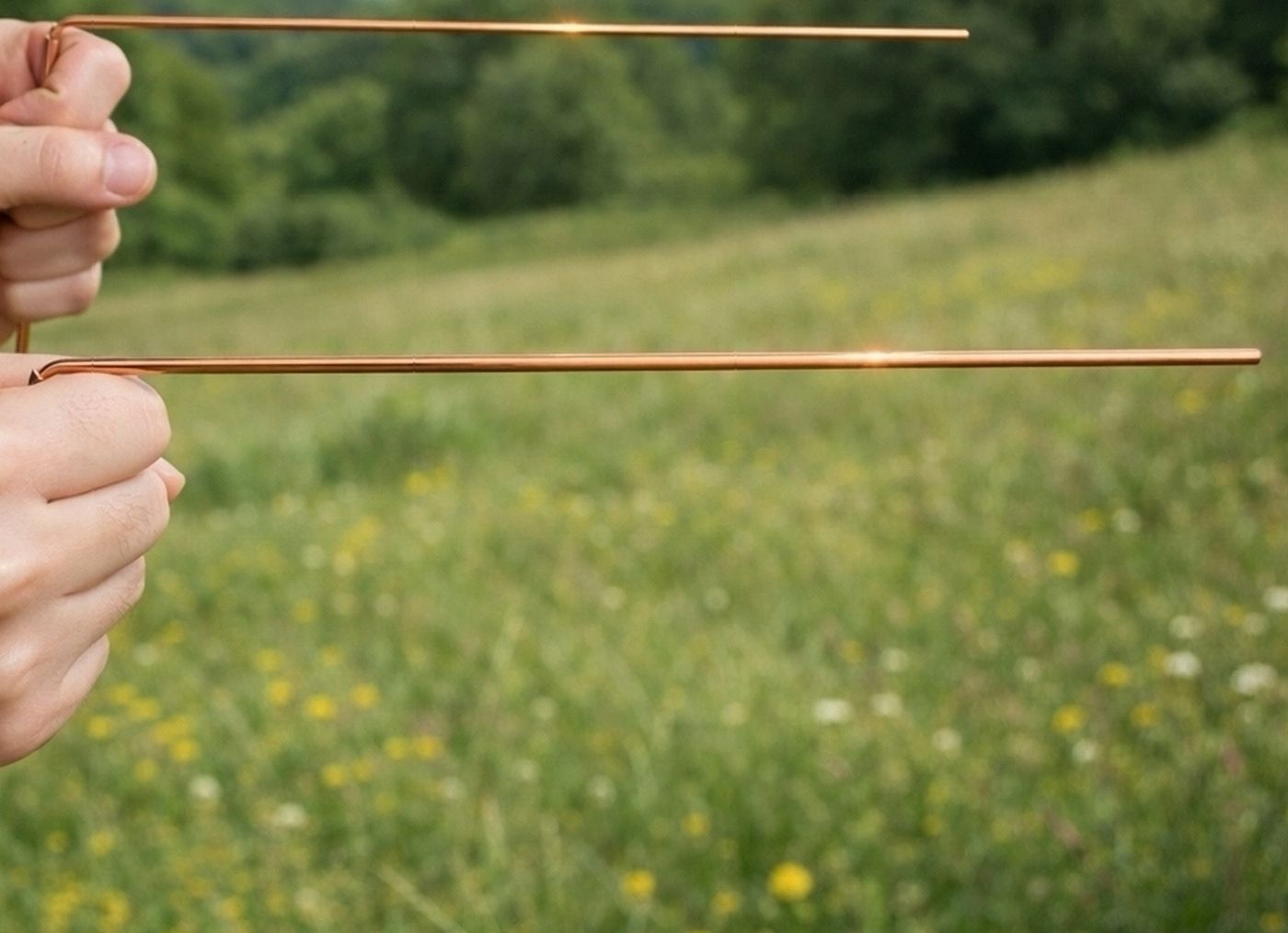
To the casual eye every pair of rods looks much the same — two bent lengths of metal. In the hand, the difference between a well-made set and a cheap one is immediate and obvious. Because the entire practice depends on the rods turning freely in response to the smallest movement, the quality of the rod is the quality of the experience.
What actually matters in a rod
A good divining rod is judged on a few simple qualities:
- Free, frictionless rotation. The single most important feature. The longer arm must pivot smoothly and effortlessly; any stiffness, catching or rough join at the bend deadens the rod and masks the very movements you are trying to observe.
- Balance and weight distribution. A properly balanced rod sits steady in the hand and responds predictably. Poor balance makes the rods drift or react to nothing at all, which is impossible to interpret.
- Material and durability. Copper remains the enduring favourite for good reason: it is lightweight, corrosion-resistant, easy to shape into a smooth rotating arm, and carries a long heritage of association with conductivity and energy. It also ages gracefully, developing a patina many owners come to value. Brass offers a firmer, slightly heavier feel; steel adds weight and durability; each has its place, but copper combines practicality, tradition and beauty in a way that suits most users.
- Finish and presentation. A clean, even finish and a proper protective pouch are not mere decoration — they protect the rod's straightness and smooth movement over years of use.
Where cheaper sets fall short
The problems with budget rods are consistent and predictable. Stiff or poorly formed bends prevent the arm from rotating freely, so the rods barely respond — or respond erratically. Inconsistent weight between the two rods makes balanced, comparable readings almost impossible. Flimsy or thinly plated metals bend out of true and corrode quickly, and many sets arrive with no protective storage at all, so they are scratched and warped before they have been properly used.
A rod that won't turn freely cannot do its job, no matter how the practitioner holds it — and that single failing is the most common complaint of all.
Our approach
Our rods are made to address exactly these points: genuine copper construction, smooth and freely rotating arms, and matched and balanced as a pair so they stay true for years. We make them this way because we use them ourselves — and because a rod that moves cleanly and honestly is the only kind worth owning.
Whether you approach dowsing as history, psychology, ritual or pure curiosity, the tool in your hands should never be the thing holding you back.