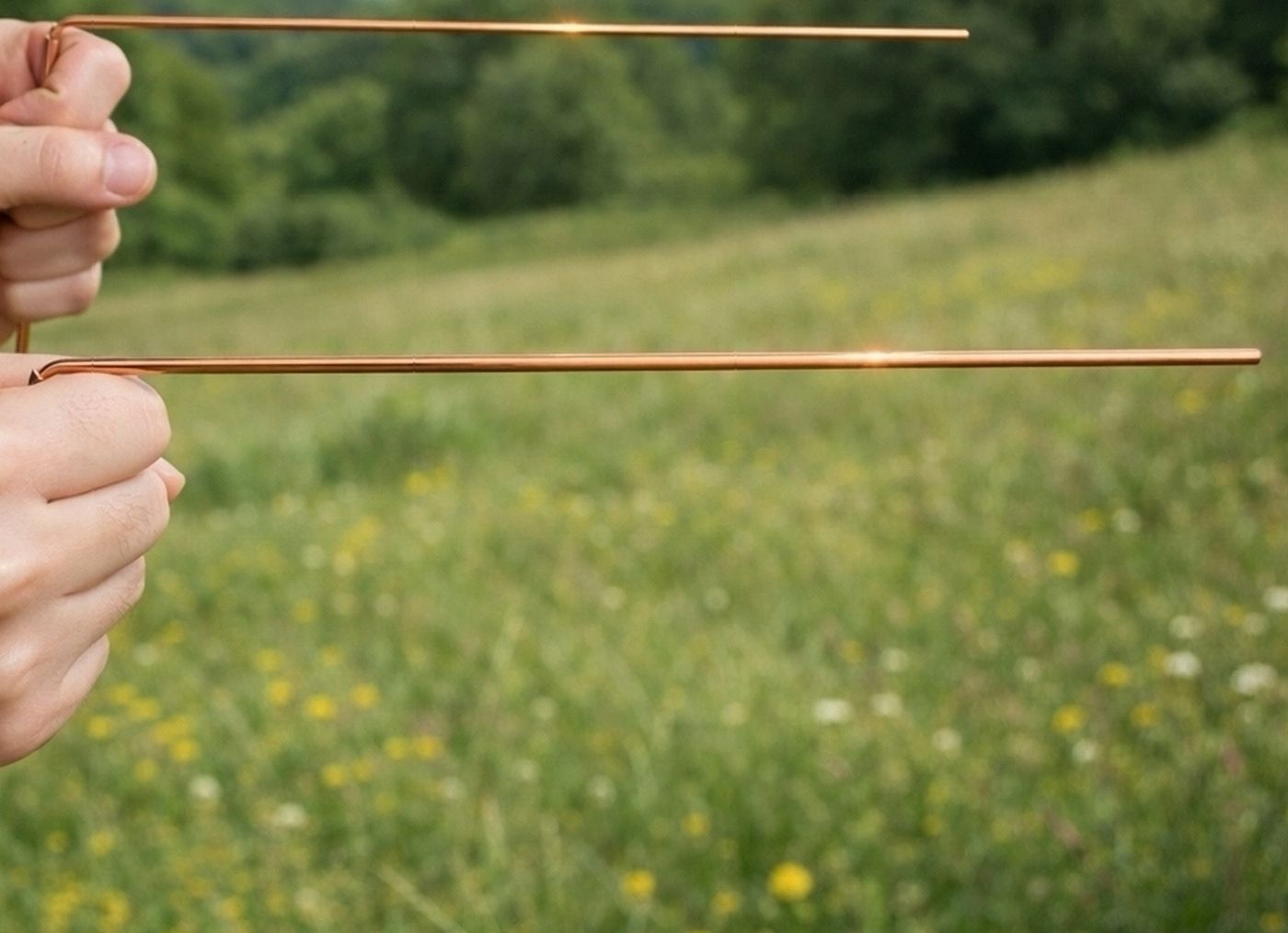
Alongside their traditional outdoor uses, divining rods have become one of the most recognisable tools in paranormal investigation. The appeal is easy to understand: rods are simple, silent, require no batteries, and respond to the smallest movement, which makes them feel immediate and personal in a way that electronic gadgets do not.
How a session typically works
An investigator holds a pair of rods loosely and parallel, then asks the space a series of questions — often beginning gently, such as inviting any presence to move the rods together for "yes" or apart for "no." Many establish a baseline first by asking questions with known answers, so they can see what a clear response looks like before moving on to the unknown.
The pacing of a session matters. Experienced investigators tend to move slowly, pause frequently, and give the rods time to settle before interpreting any movement. Rushing, or anticipating an answer too strongly, makes honest observation much harder.
The indoor challenge
Indoor work brings its own advantages and pitfalls. There is no wind to contend with, but draughts from doors, vents and heating systems, uneven floors, and even the investigator's own breathing and movement can all influence freely balanced rods. The most thoughtful investigators treat this as part of the method rather than a problem — controlling for draughts, standing still, and noting the conditions carefully so that genuinely surprising responses can be told apart from ordinary ones.
Lighting conditions, temperature changes, and the acoustic properties of older buildings also create an environment rich in subtle sensory information. Some investigators find that rods respond differently in areas with significant temperature gradients or near old stone walls — observations that are interesting whether or not a paranormal explanation is assumed.
An honest approach
Whether you come to a session as a believer, a sceptic, or simply someone who enjoys the atmosphere, the same principles apply: stay relaxed, keep good records, and be honest about the everyday explanations before reaching for an extraordinary one. That discipline is what separates a memorable, meaningful investigation from a string of easily explained movements — and, for many enthusiasts, it makes the genuinely puzzling moments all the more compelling.
The rods are not a detector in any strictly mechanical sense. They are, at minimum, a tool for paying closer attention — for slowing down in a space, asking questions carefully, and noticing what the environment offers back. That is valuable in itself, whatever else you believe about what the rods might be doing.